


Advertising and Mass Media in the Digital Age: Complete 2026 Guide
Introduction
Is the current media plan growing the brand or quietly setting it up for extinction? Is the budget leaning too hard on one channel, hoping that pure digital or pure traditional will be enough to win Filipino consumers in 2026? And when people mention advertising and mass media in the digital age, is it clear what that means for a Philippine brand with monthly sales targets to hit?
For years, many have repeated that print is dead and social media is all that matters. Others still pour most of their budget into TV and radio because “that’s how we’ve always done it.” Both extremes are risky. Filipino consumers still trust print and broadcast more than social ads, yet they also spend hours daily on Facebook, TikTok, YouTube, and messaging apps. Brands that treat this as an either–or choice fall behind those that understand how channels work together.
We have seen this shift up close over the last 12 years at Lime Digital Asia. When we started, a strong brand could still rely on mass TV and a bit of Facebook. Now, the brands we work with win by combining trusted traditional media, precision digital advertising, smart use of influencers, strong SEO, and a data-driven website that actually converts.
In this guide, we walk through what has changed, what has not, and what to do about it. We look at how Philippine media has evolved from 2020 to 2026, why traditional channels still matter, how digital marketing works as a complete system, and how AI fits into all of this. Along the way, we show how our team at Lime Digital Asia uses integrated strategies, content production, SEO, paid media, and influencer marketing to deliver real business results for brands across the Philippines and Asia.
“Stopping advertising to save money is like stopping your watch to save time.”
— Henry Ford
Key Takeaways
- A mixed media strategy that combines trusted traditional channels with digital performance marketing usually beats a single-channel focus for Philippine brands.
- Trust remains the main currency in advertising; print, TV, and radio still rank far higher than social platforms in global trust surveys.
- Filipino consumers switch between TV, print, mobile, and social feeds, so brands need channel-specific creative, not copy-pasted ads.
- AI and automation help with speed, targeting, and data, but they do not replace human strategy or creativity.
- Measuring results properly means connected campaigns with clear tracking across traditional and digital touchpoints.
- Brands that win in 2026 use high-trust channels to build reputation and high-engagement channels to drive action within one integrated plan.
What Is Advertising and Mass Media in the Digital Age?
When we talk about advertising and mass media in the digital age, we no longer mean just a TV commercial blasted to millions of viewers. We are talking about a mix of:
- Broadcast: TV and radio
- Print: newspapers and magazines
- Outdoor: billboards, transit, and mall placements
- Digital: websites, search engines, social platforms, streaming services, and messaging apps
Advertising now means any paid or owned communication that puts a brand in front of the right people across these spaces.
In the pre-internet era, media was simpler and mostly one-way. Brands bought space in newspapers, magazines, TV, radio, or billboards and spoke to almost everyone with the same message. Now, the same person can watch a TV show, scroll TikTok, chat on Messenger, and read a news site in a single hour. Spray-and-pray campaigns waste budget; brands need to think in terms of connected touchpoints and real behavior, not just “airtime.”
A “digital-first” strategy puts the bulk of attention on channels like social media, search, and online video, while a “hybrid” strategy blends those with high-trust traditional channels. In the Philippines, our experience at Lime Digital Asia is that the most effective plans sit in that hybrid space: each channel has a role across awareness, trust, and conversion.
The Evolution of Mass Media From Broadcast to Narrowcast
For decades, mass media in the Philippines and abroad meant broadcast. A 30-second TV spot or radio plug, a print ad in a major broadsheet, and broad demographic targeting (age, income, region) were the norm. Measurement relied on surveys and panel data.
The internet shifted this by allowing “narrowcast” communication. Platforms like Facebook, Google, and YouTube track what people search for, watch, click, and buy, then let advertisers show ads only to those most likely to care. A CMO can now run different campaigns for OFWs, Gen Z students, new parents, or business owners, each with its own creative and offer.
In the Philippines, media habits shifted fast. Local newspapers kept a stronger base than in some advanced markets, even as online reading grew. At the same time, Filipinos became some of the world’s heaviest social media users. Choices expanded, but meaningful reach became harder. This is why we put strong focus on attribution and measurement, so each channel’s real contribution is tracked instead of guessed.
Defining Digital Media Versus Traditional Media in 2026
Traditional media includes:
- Print newspapers and magazines
- Broadcast TV and radio
- Outdoor placements in roads, malls, and transit areas
These channels are powerful for mass reach and association with established publishers or networks.
Digital media covers:
- Websites and blogs
- Search engines
- Social platforms (Facebook, TikTok, Instagram, LinkedIn, etc.)
- Online video streaming
- Email and mobile apps
- In-app and native ads
In 2026, lines are blurred. A printed newspaper has an online edition. TV networks run apps and YouTube channels. Radio shows livestream and post clips on TikTok.
Because Filipino consumers bounce between all of these, the “traditional versus digital” debate is often a false fight. The same person who trusts a broadsheet might share that broadsheet’s articles on Facebook while watching short videos during TV ad breaks. When we design campaigns, we treat media as one field where some channels are better for trust building and others for interaction and measurement.
A simple way to see this is:
| Channel Type | Examples | Main Strengths |
|---|---|---|
| Traditional | TV, radio, newspapers, OOH | Trust, mass reach, brand stature |
| Digital – Paid | Search, social, display, video | Targeting, measurability, fast testing |
| Digital – Owned | Website, blog, email | Control, long-term value, SEO benefits |
Why Traditional Media Still Matters for Philippine Brands
It is easy to assume that because people scroll social media all day, traditional media no longer matters. The data says otherwise. A global survey by WAN-IFRA and SynoInt found that consumers trust ads in printed newspapers far more than those on social media:
- Print newspapers: 27%
- Local newspapers: 26.22%
- Commercial TV: 24.08%
- Commercial radio: 23.91%
- Social media ads: 4.14%
Trust and attention directly affect how often people remember, believe, and act on a message. When a Philippine brand appears in a respected broadsheet, on a credible radio station, or on a leading TV network, many consumers see that brand as more stable and serious. For larger purchasing decisions, that perception often separates a casual click from a real sale.
“A good advertisement is one which sells the product without drawing attention to itself.”
— David Ogilvy
At Lime Digital Asia, we often see the best performance when we combine these trusted channels with targeted digital campaigns.
The Trust Factor: Why Consumers Believe Print Over Social Media
The trust gap between print and social media has clear roots:
- Traditional outlets follow editorial standards, fact-checking, and codes of ethics.
- Journalists, editors, and producers face real consequences for errors.
- This structure builds long-term reader and viewer confidence.
Social media, by contrast, is open to almost anyone. Many creators do careful work, but there is no built-in requirement to verify facts. Misleading headlines, fake news, and vague “sponsored” posts spread quickly. Over time, people learn to view social feeds with suspicion, especially when something looks like a hard sell.
For Philippine brands, this does not mean abandoning social. It means using traditional media as a trust base and digital as the engine for follow-through. A feature in a respected local newspaper or a segment on a credible TV program raises perceived seriousness. When we then retarget that audience with digital ads or social content, they are far more likely to click and buy.
Reaching High-Value Demographics Through Traditional Channels
Some of the most valuable audiences in the Philippines still lean on traditional channels:
- Senior executives and business owners
- High-net-worth individuals
- Older decision-makers for big-ticket items
They often read print or e-paper editions in the morning, watch primetime news, and listen to radio in transit. They may use social media, but not with the same intensity as younger audiences.
These habits matter for categories like real estate, financial services, healthcare, and premium retail. Print and broadcast not only build trust, they reach decision-makers in moments of higher focus. A full-page print ad or a thoughtful advertorial invites deeper attention than a boosted post between memes.
When we run campaigns for these groups, we usually mix:
- Print placements and business magazine features
- Radio interviews or sponsored segments
- TV appearances
- Matched landing pages, search campaigns, and retargeting
Traditional media and digital work hand in hand, not as rivals for budget.
The Power of Digital Marketing: Core Components for Success
Digital marketing is often misunderstood as “boosting posts” or “running some Facebook ads.” In reality, effective digital marketing is a system that connects content, paid media, social interaction, and a high-performing website.
At Lime Digital Asia, we group this system into four pillars:
- Creative production
- Social media management
- Digital advertising campaigns
- Web development
Philippine brands that treat these as isolated projects often see patchy results. Those that view them as parts of one plan usually see compounding gains in reach, engagement, and revenue.
Creative Production: Crafting Content That Commands Attention

Strong campaigns start with strong creative assets:
- Videography to bring products and stories to life on TikTok, Reels, and YouTube Shorts
- Photography for sharp, consistent visuals across e-commerce, social feeds, and print
- Graphic design to tie everything together with clear layouts and branding
For Philippine audiences that consume most content vertically, we design vertical-first videos and images instead of cutting TVCs as an afterthought.
Cheap, low-effort content often wastes media spend because people scroll past it. We see a clear pattern: when brands invest in creative that informs and entertains, engagement rises and cost per result drops.
Social Media Management: Beyond Posting to Strategic Engagement
Posting a few times a week is not a strategy. Effective social media management starts with a clear role for each platform, then builds content and interaction around business goals.
We usually focus on:
- Brand narrative: clear voice, visuals, and themes
- Engagement: content that invites comments, shares, and saves
- Presence: consistent posting and responsive community management
- Conversion: driving traffic to websites, marketplaces, or offline events
Different platforms play different roles in the Philippines:
- Facebook: scale and community groups
- Instagram: visual storytelling for lifestyle and retail
- TikTok: discovery and viral content among younger users
- LinkedIn: B2B branding and lead generation
We combine human community managers with AI tools for speed, always with human oversight so brand messages never feel robotic.
Digital Advertising Campaigns: Precision Targeting Meets Creative Excellence
Paid digital advertising is where data and creativity meet. Good media buying without strong creative wastes impressions; strong creative without targeting wastes potential.
Our work usually centers on:
- Targeting: demographics, interests, behaviors, and lookalike audiences
- Creative: ads that people notice, remember, and act on
- Deployment: budgets, schedules, and placements across Facebook, Instagram, TikTok, Google, YouTube, and display networks
We rely heavily on:
- A/B testing of headlines, visuals, offers, and audiences
- Attribution models that connect ad spend to sales, leads, or store visits
This method lets brands scale with confidence rather than guesswork.
Web Development: Your Brand’s Digital Headquarters
A strong Facebook page is helpful, but it is not a replacement for a proper website. Social profiles sit on “rented land”; algorithms and policies can change overnight. A well-built website is the brand’s own property and the hub for all campaigns.
A good site:
- Acts as the main information hub for products and services
- Drives lead generation via forms, chat, and calls-to-action
- Powers e-commerce with smooth browsing and checkout
- Supports SEO with clear structure and content
User experience and interface design are critical. In the Philippines, where many people use mid-range devices and variable data connections, page speed and mobile responsiveness matter a lot. Our web team at Lime Digital Asia builds with these realities in mind and sets up analytics from day one.
How Philippine Media Has Shifted 2020–2026
From 2020 to 2026, the Philippine media scene changed quickly—but in its own way compared with more advanced markets. Global newspaper circulation declined sharply; locally, major broadsheets saw readership drop yet remained part of daily habits, especially in urban centers and among decision-makers.
At the same time:
- Social media became the entry point to the internet for many
- TikTok exploded, Facebook stayed dominant, YouTube remained a favorite
- Mobile data became cheaper, driving more online shopping, banking, and learning
For marketers, pure TV-and-print playbooks no longer work—but abandoning those channels ignores the trust and reach they still provide.
The Resilience of Philippine Print Media
A 2012 study on Philippine broadsheets showed that while online media was rising, newspapers remained a preferred source of news and ads across age groups. Revenues stayed strong enough to support print operations, and publishers viewed digital as an extension, not an enemy.
This produced hybrid models:
- Print editions plus websites and apps
- Combined ad packages (print + online banners + sponsored content)
- Regional papers focusing on hyper-local coverage
For advertisers, a single partnership with a broadsheet can include print ads, online placements, sponsored articles, and social amplification. For brands that want association with serious journalism, we often combine print and digital editions of leading newspapers.
Digital Platform Dominance: Social Media’s Grip on Filipino Attention
The Philippines often ranks among the top countries for time spent on social media. Daily use can reach several hours, especially among younger Filipinos. For many, social feeds are their main channel for news, entertainment, and product discovery.
This is deeply tied to mobile use:
- Many users are mobile-only
- Data promos sometimes favor specific apps, making those apps feel like “the internet”
For brands, ignoring social platforms is not an option, despite low trust in social ads. The challenge is to work with this attention while overcoming skepticism by:
- Building authentic brand voices
- Working with the right influencers
- Promoting content that adds value, not just discounts
- Linking social activity to off-platform trust signals (press, website content)
When done well, social media becomes a bridge between discovery and deeper engagement.
The Complete Digital Marketing Strategy Framework for 2026
Many Philippine brands still approach digital marketing as scattered projects: one team runs social pages, another handles SEO, another buys TV or online ads. Reports arrive, but the big picture stays fuzzy.
Over 12 years, Lime Digital Asia has refined a five-step framework that links research, planning, creative, execution, and measurement:
- Audience intelligence and market research
- Integrated channel strategy and media planning
- Content creation and campaign development
- Campaign execution and real-time optimization
- Measurement, attribution, and continuous improvement
“Marketing is no longer about the stuff you make, but about the stories you tell.”
— Seth Godin
Step 1: Audience Intelligence and Market Research
Strong strategy starts with clear understanding. We go beyond age, gender, and income to look at:
- Psychographics: values, interests, lifestyle
- Behaviors: searches, site visits, past purchases
- Customer path: how people move from awareness to purchase
- Competition: where rivals speak and where gaps exist
Insights from this step often reshape the entire plan—for example, discovering that real decision-makers read business columns and use LinkedIn, not just Facebook.
Step 2: Integrated Channel Strategy and Media Planning
Once we know the audience, we map where and how to reach them:
- TV, print, and high-reach online video for awareness
- Search and marketplaces for active demand
- Social and email for ongoing relationships
We think in terms of channel synergy:
- A print feature can drive branded search, boosting SEO and PPC
- A viral TikTok can make TV spots more memorable
Budget allocation then follows objectives: some funds fuel brand-building, others support direct response. Our media planners also work closely with publishers and platforms to secure strong placements.
Step 3: Content Creation and Campaign Development
Strategy leads creative, never the other way around. With a solid brief, we:
- Define a core big idea that works across TV, online video, social, print, and influencer content
- Adapt that idea per channel (e.g., strong 3-second hooks for Facebook video, clear storytelling in newspaper advertorials)
- Maintain consistent branding while adjusting length, tone, and angle
We often test concepts with small spends or focus groups before full rollout.
Step 4: Campaign Execution and Real-Time Optimization
Launch is the start of active management, not the end:
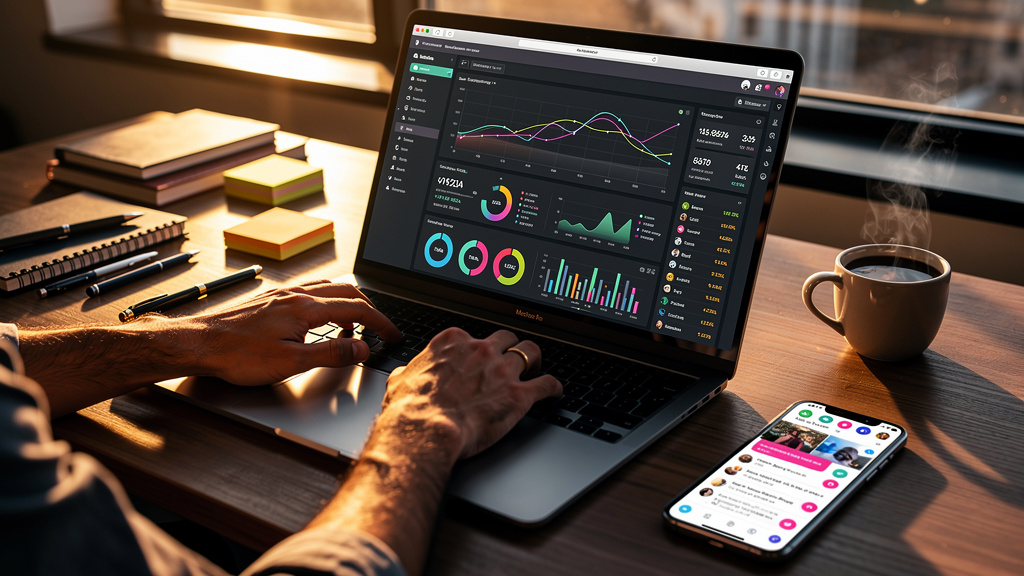
- We monitor digital dashboards closely, especially in early days
- We tie traditional air dates and print runs to traffic, search, and sales patterns
- We set clear KPIs per channel (reach, CTR, cost per lead, cost per sale, etc.)
Underperforming ads are paused or revised; strong ones get more budget. This hands-on approach often multiplies returns compared with “set and forget” campaigns.
Step 5: Measurement, Attribution, and Continuous Improvement
After each campaign, we look beyond basic numbers:
- How did different touchpoints work together?
- Which audiences responded best?
- Which creative angles pulled ahead?
We avoid relying only on last-click attribution, which can make top-of-funnel channels look weaker than they are. For traditional media, we track:
- Branded search lift
- Direct traffic
- QR or promo code use
- Store footfall near airing times
Findings feed into the next cycle, building a knowledge base for each brand.
Mastering SEO: Your Foundation for Online Visibility
Search engine optimization is one of the few marketing investments that keeps paying off long after initial work—if done correctly. Paid ads stop when the budget stops; pages that rank well on Google can bring visitors for months or years.
For Philippine brands, strong SEO lowers long-term acquisition costs because people find the brand at the exact moment they need help. Our SEO work at Lime Digital Asia combines three layers:
- On-page optimization for relevance and clarity
- Off-page SEO for authority and trust signals
- Technical SEO to make the site easy to crawl and index
On-Page SEO: Optimizing Your Digital Properties
On-page SEO covers what happens inside your website:
- Clear title tags, meta descriptions, headers, and clean URLs
- Well-researched keywords woven naturally into headings and body copy
- Internal links that connect related pages
- Optimized images (file names, alt text, compressed sizes)
- Fast loading, especially on mobile
In the Philippines, where many rely on slower connections, page speed directly affects bounce rates. On-page projects often lead to noticeable ranking gains within weeks.
Off-Page SEO: Building Authority and Trust Signals
Off-page SEO is about how the rest of the web references your brand:
- Backlinks from reputable sites (news outlets, business sites, respected blogs)
- Digital PR and guest articles
- Features in online versions of traditional media
- Local citations and a well-optimized Google Business Profile
For Philippine brands, a mention and link from a local broadsheet’s website can give a strong boost, combining brand trust with SEO value. We avoid spammy link schemes and focus on relevant, steady growth.
Technical SEO: The Foundation Most Brands Neglect
Technical SEO helps search engines crawl, understand, and index your site:
- Clean site architecture and URL structures
- XML sitemaps and robots.txt correctly set up
- Strong Core Web Vitals (speed, stability, interactivity)
- Mobile-friendly design and HTTPS security
- Fixing broken links, duplicate content, and misconfigured tags
Our technical audits at Lime Digital Asia often uncover simple issues that, once fixed, let a site benefit fully from on-page and off-page work.
Influencer Marketing: Navigating Authenticity in the Trust Economy
Influencer marketing can seem odd in a world where social media ads score low on trust. Yet brands continue to invest, and many see strong returns. People may distrust platforms in general but still believe specific personalities they follow.
In the Philippines, influencers range from big-name celebrities to niche creators in beauty, gaming, parenting, food, and business. Followers often feel they “know” these people, so recommendations feel close to word-of-mouth.
Our approach at Lime Digital Asia is to treat influencer campaigns as strategic partnerships, not just paid shout-outs.
Micro-Influencers Versus Celebrity Endorsements
Influencers are often grouped by follower count:
- Nano: 1,000–10,000 followers
- Micro: 10,000–100,000
- Macro: up to ~1,000,000
- Mega/Celebrity: 1,000,000+
Engagement rates often move opposite to follower count. Smaller creators usually have tighter communities and higher engagement, which makes them powerful for targeted campaigns. They tend to feel more relatable, which raises trust.
Celebrity endorsements still matter for nationwide awareness and big launches but come at a higher cost. We often recommend a portfolio approach: one or two larger names plus many micro influencers, which usually gives a better balance of reach, cost, and engagement.
Vetting Influencers: Beyond Follower Counts to Real Influence
Choosing the right influencers means checking:
- Engagement quality: real comments vs. spam
- Audience fit: age, location, interests
- Content quality: brand-safe themes and consistent style
- Values alignment: no regular controversies that clash with the brand
- Past partnerships: how followers responded and whether campaigns drove action
Our internal checklist at Lime Digital Asia also flags sudden follower spikes or large shares of foreign followers for a local campaign.
Campaign Structures That Drive Measurable Results
Strong influencer programs are structured like full campaigns, often including:
- Product seeding
- Teaser posts
- Launch content and live streams
- Follow-up reviews
We give clear guidelines but leave room for each creator’s voice. Followers spot scripted posts instantly; content feels better when creators speak naturally.
To measure results, we use:
- Trackable links
- Discount codes
- Custom landing pages
- Rights to reuse influencer content in paid ads and on brand channels
This turns influencer assets into powerful social proof across platforms.
Paid Advertising: Maximizing ROI Across All Channels
Paid media is like fuel poured onto the engine built by organic content, SEO, and brand work. Used well, it gives predictable reach, clicks, and conversions. Used poorly, it burns budget.
The main categories are:
- Paid search (PPC)
- Paid social
- Display and programmatic
- Traditional paid placements (TV, radio, print, outdoor)
Each plays a different role along the funnel.
“Don’t count the people you reach; reach the people who count.”
— David Ogilvy
At Lime Digital Asia, we manage paid media across these forms, always tied to clear objectives and tight measurement.
Paid Search (PPC): Capturing High-Intent Customers
Paid search (e.g., Google Ads) targets people who are already looking for something. When someone types “best insurance plan Philippines” or “buy wireless earphones online,” they are close to action.
Effective PPC depends on:
- Smart keyword selection and match types
- Strong ad copy that matches user intent
- Well-structured campaigns and ad groups
- Fast, relevant landing pages
- Regular search term reviews and negative keyword updates
Remarketing campaigns help bring back visitors who did not convert the first time.
Paid Social: Interrupting With Relevance and Value
Paid social does not wait for people to search. Ads appear in feeds while users are browsing, chatting, or watching videos.
Platforms like Facebook, Instagram, TikTok, and LinkedIn offer:
- Detailed targeting by demographics, interests, and behavior
- Custom and lookalike audiences
- A mix of image, video, carousel, and collection formats
Creative is the main success factor. We test:
- Hooks and thumbnails
- Captions and calls-to-action
- Offers and formats
Full-funnel structures work best: top-of-funnel for reach, mid-funnel for education, and bottom-of-funnel for retargeting.
Display and Programmatic Advertising
Display and programmatic ads appear across websites and apps as banners, native placements, and video pre-rolls. Programmatic systems bid in real time on impressions that match target criteria.
Uses include:
- Maintaining brand presence across the web
- Supporting long consideration cycles
- Remarketing to past visitors or engaged users
We manage frequency carefully to avoid ad fatigue and focus on both direct and assisted conversions.
Traditional Media Advertising: When and Why to Invest
Traditional paid placements still offer strong benefits in the Philippines, especially when:
- Targeting audiences that rely heavily on TV, radio, or print
- Launching at national scale
- Seeking a strong reputation boost
Measurement relies on:
- Branded search and direct traffic lift
- QR or promo code use
- Sales and footfall before vs. after campaigns
Traditional media works best when creative clearly points people to digital calls-to-action.
The Rise of AI in Marketing: Tool Not Replacement
Artificial intelligence has moved into daily marketing life. Tools can now draft copy, edit images, segment audiences, forecast results, and power chatbots. Some fear AI will replace marketers, copywriters, and even journalists. Our experience suggests otherwise.
AI is excellent at data-heavy and repetitive tasks. It is far weaker where nuance, emotion, or original insight is needed. The best results come when human teams use AI as a helper for speed and scale, with humans still in charge of strategy, creative direction, and final approval.
“The key is not to fear AI, but to decide clearly what you still want humans to do best.”
— Common advice among modern marketing leaders
At Lime Digital Asia, we treat AI as one more tool, not the decision-maker.
AI’s Strengths: Efficiency, Personalization, and Data Processing
AI shines at:
- Processing large datasets to spot patterns in performance
- Assisting with personalization (different content for different segments)
- Handling routine tasks like initial ad copy drafts, image tagging, or post scheduling
- Powering chatbots and auto-replies for common customer questions
AI-assisted workflows cut down on repetitive work so our team can focus more on strategy and creativity.
AI’s Limitations: The Irreplaceable Human Element
AI has clear limits:
- It can “hallucinate” and produce wrong but confident-sounding information.
- It lacks true critical thinking and cultural sensitivity.
- It struggles with original creative ideas and deep emotional storytelling.
- It cannot own ethical responsibility for messages that might offend or mislead.
There have already been cases abroad where over-reliance on AI led to tone-deaf or factually wrong campaigns that triggered backlash. Our rule is simple: AI may assist, but human experts at Lime Digital Asia always review, refine, and take responsibility for what goes live.
Case Studies: Real Philippine Brands, Real Results
Grand theories are helpful, but the real test of any agency is what happens when campaigns go live. Below are three simplified case studies based on Philippine brands we have worked with at Lime Digital Asia. Details are adjusted to protect client privacy, but the structures reflect real projects.
Case Study 1: E-Commerce Brand Scaling to 7-Figure Revenue
A fast-growing e-commerce brand hit a sales plateau. They had a decent social presence, ran boosted posts, and depended heavily on marketplace traffic. Acquisition costs rose, while repeat purchases lagged.
Our approach:
- Reworked their website for speed, conversion, and SEO
- Developed a content plan with product education and lifestyle stories
- Produced vertical-first videos and fresh product photography
- Launched integrated paid campaigns across Facebook, Instagram, TikTok, and Google Search
- Partnered with aligned micro influencers
Within six months:
- Monthly revenue more than doubled, reaching seven figures in Philippine pesos
- Cost per new customer dropped through better targeting and creative testing
- Email and remarketing flows increased repeat purchase rates
Case Study 2: Traditional Business Digital Shift
A long-established brick-and-mortar business with strong word-of-mouth worried about online competitors. Their digital presence was limited to a basic website and a rarely updated Facebook page.
We proposed a phased plan:
- Rebuilt their website with clear messaging, stronger visuals, and lead capture
- Optimized for key search terms their customers actually used
- Launched a social media strategy focused on brand story and customer results
- Ran paid search and targeted Facebook/Instagram ads
- Trained the internal team on digital metrics and processes
Over the next year:
- Online leads grew steadily from both search and social
- The brand expanded reach to new cities and younger segments
- The owners felt they had upgraded their marketing without losing long-earned trust
Case Study 3: Social Media Campaign That Went Viral
A consumer brand with a modest budget wanted massive awareness for a new product line in a crowded category. Traditional mass media was too costly, so we focused on a creative-led social campaign with influencer support.
Our team:
- Developed a concept around a simple, highly relatable Filipino insight
- Produced short vertical videos for TikTok and Reels plus meme-style graphics for Facebook
- Partnered with a mix of micro and macro influencers to recreate the concept in their own style
Results:
- Hundreds of user-generated versions of the core idea
- Total impressions far beyond the original paid plan
- Engagement well above platform benchmarks
- A clear lift in store visits and online orders, tracked via tagged links and promo codes
Common Mistakes Philippine Brands Make and How to Avoid Them
After working with many brands across the Philippines, we see the same errors again and again:
- Relying on a single channel. Putting almost all spend into TV or Facebook makes results fragile. Use a mix, with each channel having a clear role.
- Skipping audience research. Copying competitors or chasing trends without knowing real buyers leads to waste. Invest in understanding who your customers are and how they decide.
- Treating content as an afterthought. Weak creative drags down even the best media plan. Prioritize clear, compelling content.
- Poor marketing–sales alignment. Campaigns run, but sales teams or frontliners are not briefed. Coordinate regularly so everyone knows offers and expectations.
- Chasing vanity metrics. Likes and views are nice, but not if they do not lead to inquiries, sign-ups, or sales. Set goals tied to revenue.
- Weak tracking and analytics. Missing conversion tags, no call tracking, unused QR codes—these leave teams guessing. Fix tracking early.
- Treating SEO as a one-off task. Short sprints are rarely enough. Consistent content and authority building win the race.
- Picking influencers by star power alone. Poor fit or inflated numbers lead to disappointment. Vet carefully for audience quality and alignment.
- Spreading budgets too thin. Being “everywhere” with tiny spends means being invisible. Focus on the few best channels first.
- Viewing digital as a quick fix. Short bursts during pressure periods are not enough. Build owned assets—website, email list, content library—for long-term advantage.
Key Takeaways
By now, several themes should stand out:
- Filipino consumers spend huge amounts of time online, yet still trust and consume traditional media.
- A strong Philippine media plan rarely picks a single “winner” channel; it combines trust-heavy platforms (print, TV, radio) with performance-driven digital channels.
- Tactics alone—posting more, boosting more, buying more spots—cannot fix a weak strategy. Audience research, clear channel roles, and strong creative are non-negotiable.
- Measurement and attribution keep everyone honest and guide smart adjustments.
- AI, advanced ad platforms, and influencer networks give brands more tools than ever, but they work best under human insight and ethical thinking.
Conclusion
Advertising has never been simple, and the mix of channels available in 2026 can feel overwhelming without a clear plan. Philippine brands operate in a market where people watch TV, read local papers, live on social media, and search on Google—often within the same hour.
The key is not to crown a single channel, but to design a connected strategy where:
- Print and broadcast raise perceived reliability
- SEO, social, and paid media drive measurable action
- Influencers and AI fit into the picture in a controlled, thoughtful way
At Lime Digital Asia, this is the kind of work we do daily for brands across the Philippines and Asia. We bring together creative production, influencer access, SEO strength, paid media skills, and web development in one integrated approach focused on real engagement and conversions.
If the goal is to move beyond guesswork and build a media strategy that is ready for 2026 and beyond, the best time to start aligning these pieces is now.
FAQs
What Does “Advertising and Mass Media in the Digital Age” Really Mean for Philippine Brands?
It means working with a mix of traditional channels (TV, radio, print) plus digital channels (social media, search, websites, apps). For Philippine brands, it is less about choosing one side and more about using each channel for what it does best, while keeping messaging and measurement connected.
Is Traditional Media Still Worth Paying for When Everyone Is Online?
Yes—especially in the Philippines. Studies show that people still trust ads in newspapers, TV, and radio far more than social media ads. These channels are strong for reputation building and reaching high-value groups like executives and older buyers. The best approach is to combine them with digital campaigns that handle targeting and conversion.
How Long Does SEO Take to Show Results?
It depends on competition, site health, and how much a brand invests in content and authority. Many clients start seeing early ranking and traffic improvements within three to six months, with stronger gains building over a year or more. SEO is a long-term play that reduces paid acquisition costs over time.
Are Influencers Still Effective if People Distrust Social Media Ads?
They can be very effective when chosen and managed well. Followers may distrust platforms but still trust specific personalities they follow closely. The key is to pick influencers whose audience, values, and content style fit the brand, then structure campaigns for authenticity and clear tracking.
How Can Lime Digital Asia Help My Brand in Practice?
We can handle full planning and execution of integrated campaigns, from research and strategy to creative production, SEO, social media, influencer partnerships, paid media, and web development. Our team focuses on clear goals, transparent reporting, and steady improvement so brands see not just more activity, but real growth in engagement, leads, and sales.
